Graphic Design That Works
    “From Concept to Finished Print”
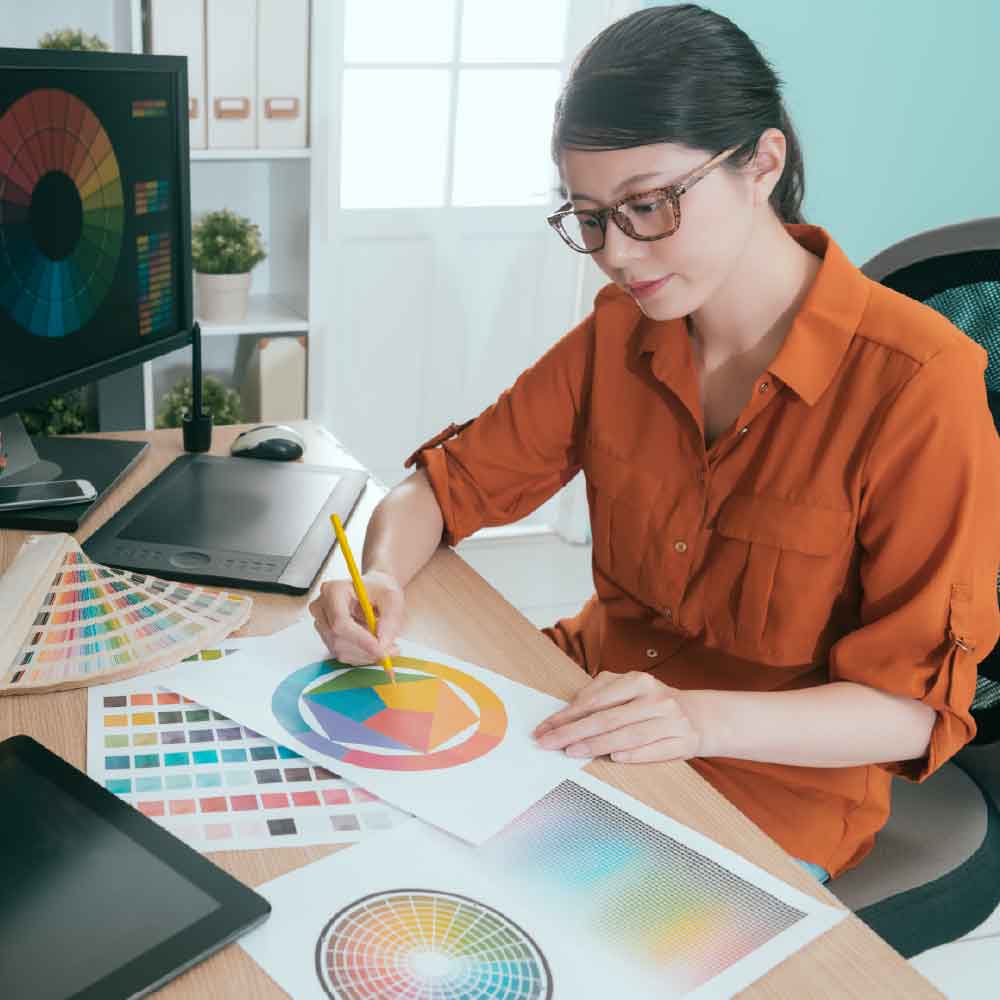
Good graphic design does more than look attractive. It aligns visual communication with your brand, your audience, and the technical realities of print production. When all three work together, the result is print material that performs.
Why Print Design Is More Complex Than It Appears
Graphic designers are often asked to deliver on two very different objectives: 1) compelling creative work that captures attention, and 2) technically precise files that meet professional print production requirements.
These are genuinely different disciplines. Creative excellence requires visual judgment and an understanding of brand and audience. Technical print preparation requires deep knowledge of colour management, file specifications, resolution standards, and the requirements of each printing process — knowledge that is constantly evolving.
At Intertype, we review hundreds of artwork files every week. The vast majority contain errors that will affect the finished product. These range from incorrect colour profiles and low image resolution to missing bleeds, fonts and non-compliant PDF standards. Left uncorrected, they cause reduced print quality, inconsistent branding, project delays, and unnecessary cost.
This is not a reflection of a designer’s creative ability. It reflects how much technical specialisation print production genuinely requires.
Common Errors That Affect Print Quality
Understanding where things go wrong is the first step to preventing it. The most frequent issues include:
Colour space errors
Print uses CMYK ink, not RGB light. Files built in RGB must be carefully converted with the correct colour profile. Without this, colours can shift dramatically between screen and print.
Insufficient image resolution
Images that look sharp on screen are often only 72 dpi — well below the 300 dpi required for quality print. Scaling a low-resolution image up doesn’t recover detail; it makes the problem worse.
Missing Bleed
Printed materials are trimmed after printing. Without bleed — artwork extended slightly beyond the trim line — cutting tolerances can leave unwanted white edges on the finished piece.
Non-compliant PDF files
The PDF/X-1a standard ensures files are self-contained, colour-managed, and consistently reproducible. Files that don’t comply introduce unpredictable variables into production.
Incorrect trim sizes and safe zones
Content placed too close to the trim edge risks being cut. Understanding the relationship between bleed, trim, gutters, printable areas (ie: safe zone) is essential for a print result that meets your graphical design intention.
Missing Fonts
When a print file uses a font that is not embedded or outlined, the printing press system will substitute to the nearest alternative it has available. The result is changed text spacing, unexpected line breaks, and a layout that no longer looks the way it was designed. To avoid this, fonts should always be embedded when exporting the PDF, or outlined in the design application before the file is sent.
How Intertype Helps You Get It Right
Intertype has developed a robust artwork development, proofing and approval process.  This system minimises differences between creative design  and the final produced printed result.
Artwork Advice. We can review your project and artwork files and provide advice on print readiness before you commit to a print run. Â Simply book a time with one of our publish and print experts or email through your files for a obligation free review.
Artwork Templates. As part of our collaborative artwork service, we supply purpose-built templates for many printed products including ring binders, tab dividers, presentation folders, and pull-up banners which give designers correct dimensions, bleed, and safe printable areas from the start.
Artwork Check. Every file we receive goes through a comprehensive pre-flight check — covering colour spaces, resolution, trim sizes, bleed, and PDF/X-1a compliance. If issues are found, you and/or your designer is notified before production begins.
Artwork Repair. When issues are identified, Intertype offers a range of support to get your files right. Â From advice and instructions to DIY’ers to allow you to update your own artwork, through to collaborative design and finally full service artwork services where we take care of the issues for you.Â
Working With Intertype
When you are ready, Intertype will guide you through our 3-Step Artwork prepreation process:
Step 1: Artwork Development
Step 2: Proofing and Review
Step 3: Approval and Press Ready
Step 1 Artwork Development
Our role is not to direct your creative decisions — it is to ensure your ideas and designs are accurately reproduced in print.  To do this, Intertype offers 4 different levels of artwork support depending on your needs:
Level 1 : DIY : We review/preflight print ready artwork you supply
Level 2: Collaborative Artwork Design : We provide guidelines and templates for you to work from and are available to help you through the process
Level 3: Full Service Artwork Design where we take care of everything for you.
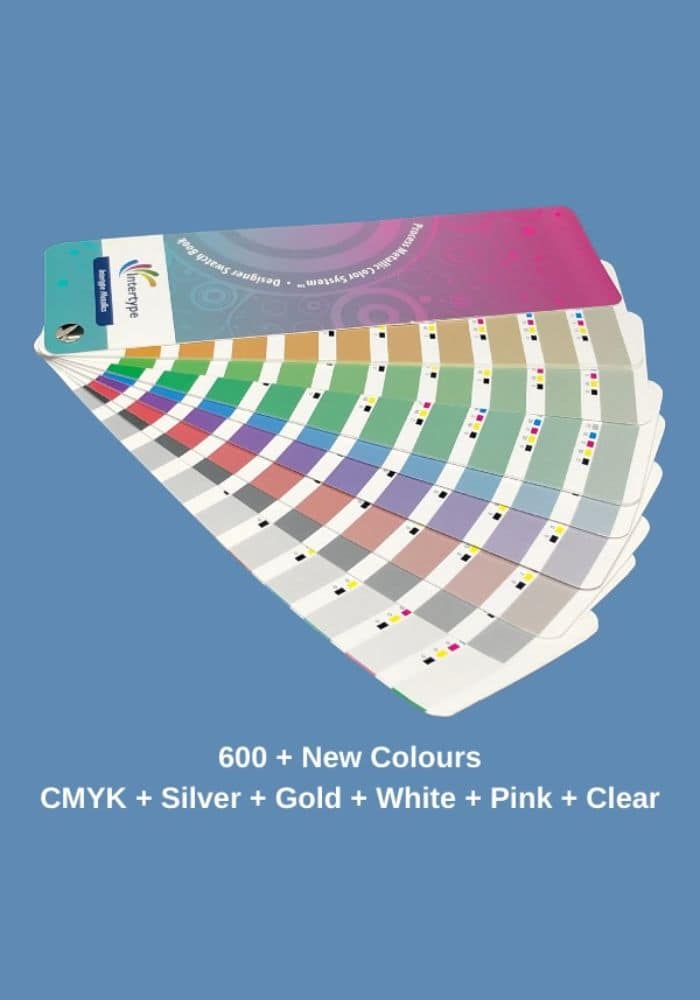
Level 4: Advanced CMYK+ Artwork Design for designers who want to make their artwork “POP” !
Step 2 Proofing
Once artwork is provided, Intertype will put your files through our preflight system and check your files for print readiness. A proof will be emailed to you for your careful review. Â If changes are needed, then Intertype will work with you on getting those implemented. Â Updated artwork then goes through the same preflight system and check and proofs sent to you for review. Â A typical proofing cycle takes 1-2 revisions.
Step 3 Approval
Once you approve your artwork, your artwork is finalised and moved into pre-production for preparation and queuing for the next production run.
We are here to Help
If you are in doubt or need some help, we are only a phone call or email away. Â We offer three different levels of artwork design support, including DIY support, collaborative design and full service artwork design. Â Or simply reach out and have a chat with a publish and print expert. Â